There is a point in the life of a growing company when the very things that helped create early success can begin to make the next stage more difficult. In the beginning, a founder or CEO may naturally carry much of the sales motion. They know how to tell the company’s story, which prospects are worth pursuing, what concerns tend to surface in a deal, and how to navigate the relationships that matter most. Much of that knowledge is not written down because it has been built over years of experience, conversation, and instinct. It works, often very well, until the company reaches the point where one person can no longer be at the center of every important opportunity.
A CEO recently described that tension to me. Their company had already experienced several years of significant revenue growth, so this was not a story about a business struggling to gain traction. The challenge was almost the opposite: the company had proven that it could grow, but the CEO was still playing a prominent role in managing relationships and helping close deals. That level of involvement had contributed to the company’s success, yet it was becoming increasingly clear that it could not be the model for the future. They wanted to multiply what was working, grow faster, and give the broader team more capacity to carry those relationships forward, but being directly hands-on all the time was no longer realistic.
What struck me about that conversation was that the challenge was no longer simply “How do we sell more?” It was how to take what had worked through the CEO and make it work more broadly through the organization. That is a much more important question, because adding more leads, more salespeople, or more technology does not automatically create leverage. If the knowledge, judgment, trust, and decision-making that move deals forward still depend heavily on one person, then additional activity can actually create more pressure on that same person rather than less. That is one of the reasons SURVEY is the first stage in my SCALE Sales Success Path.
SCALE stands for Survey, Clarify, Architect, Launch, and Enhance
SURVEY comes first because before a company can decide what needs to change, it needs an honest view of what is already happening. The goal is not to rush into a prescription. It is to understand the current state well enough to see where success is coming from, where the organization is relying too heavily on individual experience, and where there may be an opportunity to make strong practices more visible and repeatable.
In growing companies, the sales process that leadership believes exists and the process that is actually being practiced are not always identical.
That does not necessarily mean something is wrong. Often, it simply means that people have adapted. A founder may be filling gaps without realizing it. A high performer may have developed an effective approach that has never been shared with the rest of the team. Salespeople may be making judgment calls based on experience because the organization has never fully articulated what good looks like. Over time, those informal practices become part of how the company operates, even if no one has stopped to examine them as a whole.
This is why I think of SURVEY as an exercise in seeing before solving. The purpose is not to interrogate a team or expose every flaw in the system, and it is certainly not to impose bureaucracy where good judgment is already producing results. Instead, SURVEY creates the space to understand what deserves to be preserved, what needs greater clarity, and what may still depend too heavily on the founder or CEO.
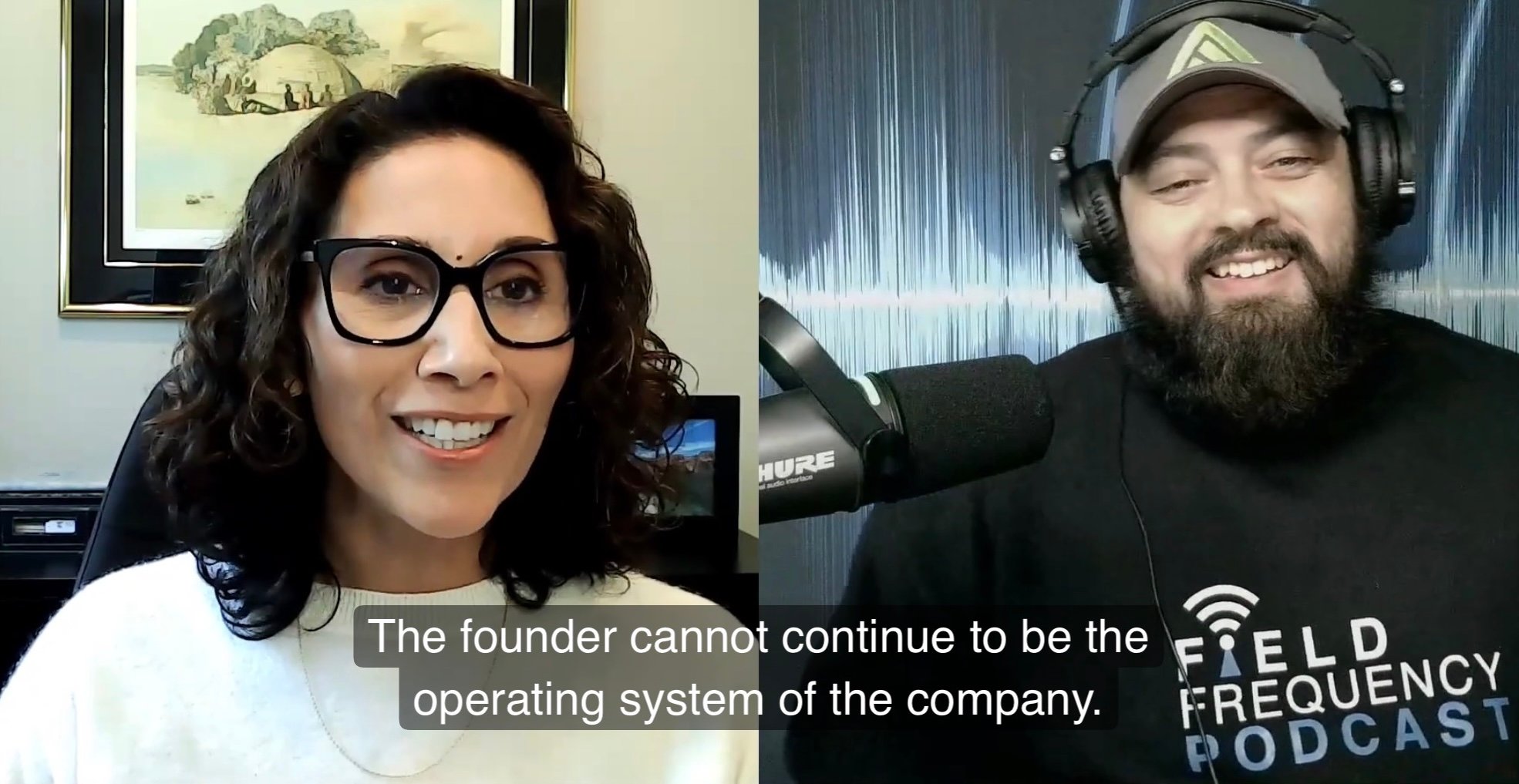
Jason Cortez and I talked about this during my recent appearance on the Field Frequency podcast, especially the fragile moment when a company begins moving from founder-led momentum toward repeatable execution. I put it this way during our conversation:
“The founder cannot continue to be the operating system of the company.”
I don't mean to suggest that founders should remove themselves from sales or stop being involved in important relationships. In many businesses, their credibility, vision, and market knowledge will continue to be incredibly valuable. The point is that the organization cannot depend on the founder being personally present for the system to work. At some point, the company has to understand what has made those interactions successful, determine what can be transferred or reinforced across the team, and create enough visibility that others can act with greater confidence.
For the CEO I mentioned earlier, that is really what “going faster” means. It is not simply increasing the volume of activity. It is creating more capacity without increasing dependence on one person at the same rate.
Every company grows differently. Before we decide what to change, we take the time to understand what is working, where the business still depends too heavily on individual knowledge, and what needs to become more visible and repeatable. That’s what we build together through the SCALE framework, because growth should not depend on your CEO being in every conversation or every deal.
Clear Steps. Stronger Sales.